Travellers Stream

Binge the World, One Journey at a Time

  • What books do you want to read?

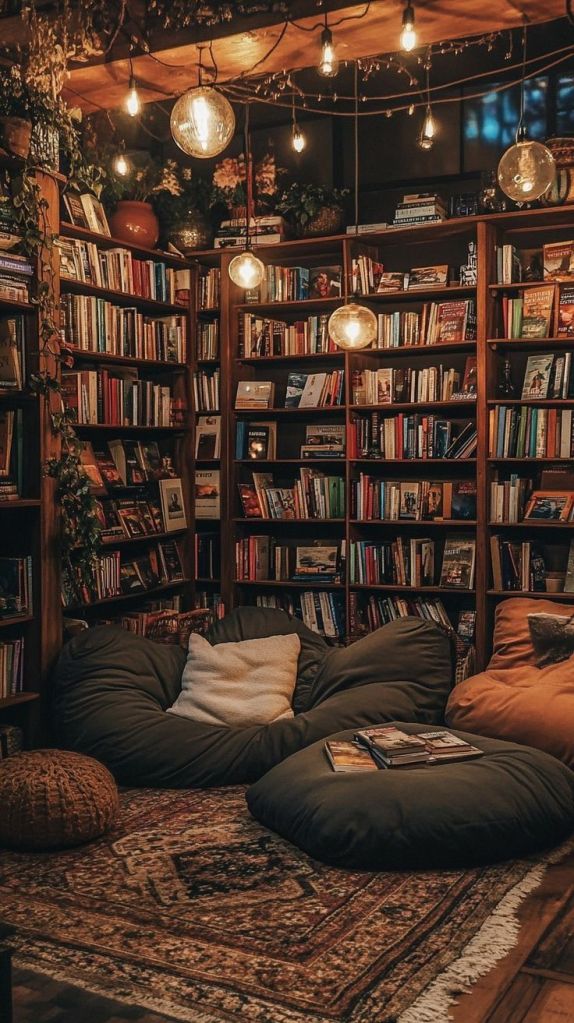
    I would love to live surrounded by books. I’m drawn to suspense, real-life stories, and motivational reads that stay with you long after the last page.

    I miss my visits to the library on the way home from college, wandering through shelves with my friends, losing track of time without even realizing it.

    Now, time feels like a luxury. The phone has replaced so many things. The worst part is, I can’t even say I don’t want it—because everything is inside it.

    Life revolves around that small screen. Despite all this advanced technology, days pass by quickly, yet the work remains unfinished. It’s exhausting and frustrating.

    …yet, somewhere deep down, the love for books hasn’t faded—it’s just waiting patiently.

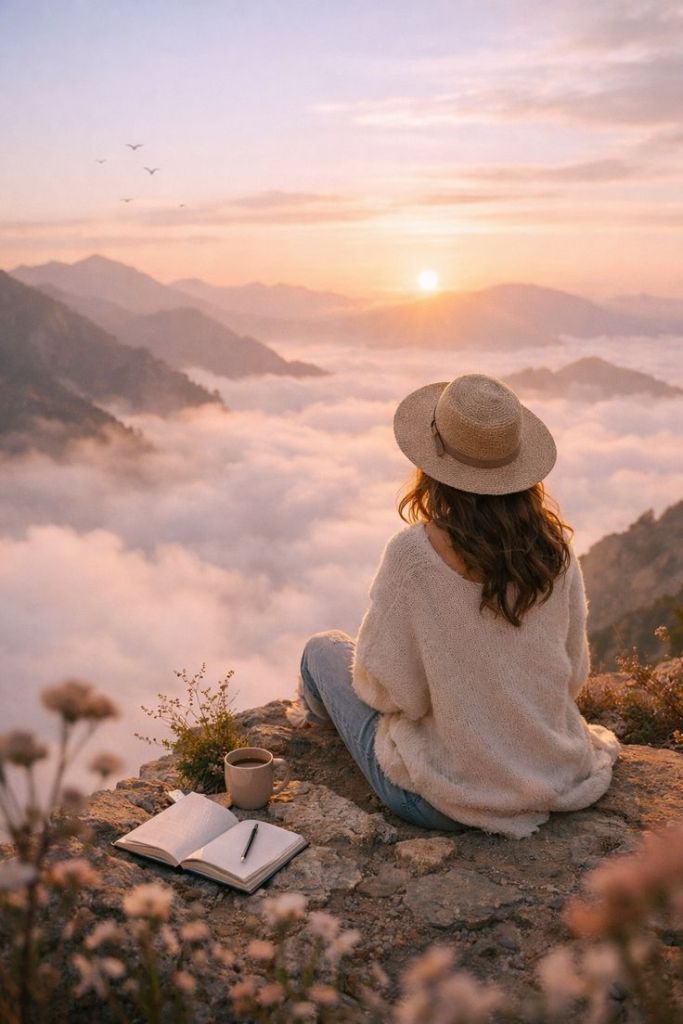
    I still imagine a quiet corner of my day, even if it’s just ten minutes, where I pick up a book instead of my phone.

    The smell of old pages, the weight of a story in my hands, the silence that feels full rather than empty—books had a way of slowing life down. They didn’t buzz, they didn’t demand replies, they simply waited.

    Maybe adulthood didn’t take away time; maybe it just scattered it. Between responsibilities and screens, the habit of reading slipped away without us noticing.

    And yes, the phone holds everything—work, people, memories, distractions—but it also steals presence. It keeps us busy without always making us fulfilled.

    I hope someday I return to books, not as an escape, but as a reunion. A reminder that it’s okay to pause. That not every moment has to be productive. That unfinished tasks can wait, but unfinished dreams shouldn’t.

    Until then, the reader in me still exists—quiet, hopeful, and ready to turn the page again. 📖✨

  • What do you enjoy doing most in your leisure time?

    💕💕💕💕💕

    What I enjoy most in my leisure time is talking to my friends. I truly cherish our conversations—whether they are funny, emotional, deep, or completely random.

    There’s something comforting about sharing laughter, listening without judgment, and being understood without having to explain too much.

    My friends are my safe space. A simple call or message can instantly lift my mood, calm my mind, or remind me that I’m not alone.

    Even the nonsense conversations matter, because they’re filled with warmth, honesty, and connection.

    In a busy world, these moments of genuine human connection are what I value the most.

    I am so lucky to have such beautiful people as friends in my life.

    I truly love my friends. Even though we don’t meet often because of our responsibilities and busy lives, a simple call or even a message is enough to lift my spirits and get me going.

    It reminds me that no matter how much time passes, the bond remains the same—strong, comforting, and full of warmth.

    Forever grateful for friends who make life lighter, one conversation at a time.

    🌸🌸🌸

  • In a world that constantly celebrates social validation, packed calendars, and endless conversations, choosing solitude is often misunderstood. Many assume that enjoying your own company means loneliness or social withdrawal.🕊️

    Psychology says otherwise.


    If you genuinely enjoy being alone—without feeling bored, anxious, or incomplete—it’s often a sign of emotional depth, mental strength, and self-awareness. Here are 10 unique traits commonly found in people who are comfortable with their own company.✨

    1. Strong Emotional Independence
    You don’t rely on others to regulate your emotions. Your happiness, peace, and self-worth come from within, not from constant external validation.

    2. High Self-Awareness
    Spending time alone allows you to understand your thoughts, patterns, and emotions deeply. You know your strengths, weaknesses, and boundaries—and you’re honest with yourself about them.

    3. Inner Confidence
    You don’t fear silence or solitude because you trust yourself. You don’t need to prove anything or perform for others to feel valuable.

    4. Selective Social Circle
    You don’t avoid people—you choose wisely. Instead of many shallow connections, you prefer fewer, meaningful relationships that align with your values

    5. Creativity and Deep Thinking
    Solitude fuels imagination. Many creative ideas, life insights, and solutions are born when the mind is free from noise and distractions.

    6. Emotional Resilience
    You handle loneliness, setbacks, and uncertainty better than most. Being alone doesn’t scare you—it strengthens you.

    7. Comfort With Silence
    Silence isn’t awkward for you; it’s peaceful. You don’t feel the need to fill every moment with conversation or stimulation.

    8. Strong Boundaries
    You know when to say no. You don’t overextend yourself socially just to fit in or avoid being alone.

    9. Authenticity
    You don’t change yourself to be accepted. Time alone has helped you understand who you truly are—and you stay true to that.

    10. Inner Fulfilment
    You enjoy simple moments: a cup of tea, a quiet morning, a walk, a thought. Your joy isn’t dependent on crowds or constant companionship.

    Final Thought


    Enjoying your own company isn’t a weakness—it’s a rare emotional skill. It means you’ve learned to sit with yourself, understand yourself, and accept yourself.


    Not everyone can do that.


    And that’s what makes it powerful.

  • What are your thoughts on the concept of living a very long life?

    Living a very long life is a fascinating idea—and a complicated one ❣️

    🌸🌸🌸🌸

    On one hand, longevity feels like a gift. More time allows for deeper relationships, wisdom earned through experience, and the chance to witness social and cultural change. When a long life comes with health, dignity, purpose, and independence, it truly feels like a blessing.

    But a long life without quality can be heavy. Today, we often see physical survival outpacing emotional well-being—loneliness, loss of community care, and old age becoming something to manage rather than honour.

    Earlier generations didn’t measure life by its length alone, but by how well it was lived—through rest, recovery, shared responsibility, and acceptance of life’s natural stages.

    For me, the real question isn’t how long we live, but how meaningfully. A shorter life filled with connection and purpose can feel complete, while a very long life without warmth or dignity can feel exhausting.

    Perhaps the ideal is to live long enough to love deeply, contribute meaningfully, and let go gently—without clinging to time out of fear.

  • What could you do differently?

    If I had to do something differently, I would consciously choose not to follow today’s restless version of the world. Instead, I would walk back—slowly and deliberately—to the rhythm my grandparents lived by.

    Everything today feels rushed, loud, and confused. In the name of being modern, we’ve abandoned structure, patience, and wisdom. People are everywhere and nowhere at the same time—neither rooted in tradition nor fully grounded in progress. There is freedom, yes, but also chaos. And somewhere along the way, peace quietly slipped out of our lives.

    My grandparents followed rules—not out of fear, but out of understanding. Simple things mattered. Home remedies for a cold or cough were the first response, not pills for every discomfort. Rest was respected. The body was listened to, not forced.

    There were boundaries that made sense. Not stepping out during twilight hours—after sunset, until the last trace of light disappeared from the sky—wasn’t superstition to them. It was a pause. A transition time. A moment to slow down, to return home, to let the day settle. I believe these practices worked, not magically, but mentally, physically, emotionally. They created discipline, awareness, and calm.

    Life then wasn’t perfect, but it was balanced. People were happier with less. Relationships were deeper. Time moved slower, and so did worries.

    What could I do differently?
    I could stop mocking old wisdom as outdated.
    I could stop equating speed with success.
    I could bring back pauses, routines, and respect for nature and time.
    I could live a little less “modern” and a little more mindful.

    Maybe progress doesn’t always mean moving forward.
    Sometimes, it means remembering what we forgot—and choosing it again.

    Love Shama ✨

  • If you had a freeway billboard, what would it say?

    This is what my freeway billboard would say.

    We often measure life with invisible deadlines—by age, by achievements, by what others seem to have figured out. Somewhere along the way, we start believing we’ve missed our chance. That certain doors are closed forever.

    But life doesn’t work on a single timeline.

    Every experience—mistakes, pauses, detours, even the years that felt “wasted”—adds clarity. They shape patience, perspective, and resilience. What feels like delay is often preparation in disguise.

    Starting late is still starting. Beginning again is still progress. And choosing yourself, even now, is not failure—it’s courage.

    It’s not too late. It was never too late.

    💞

  • Do you spend more time thinking about the future or the past? Why?

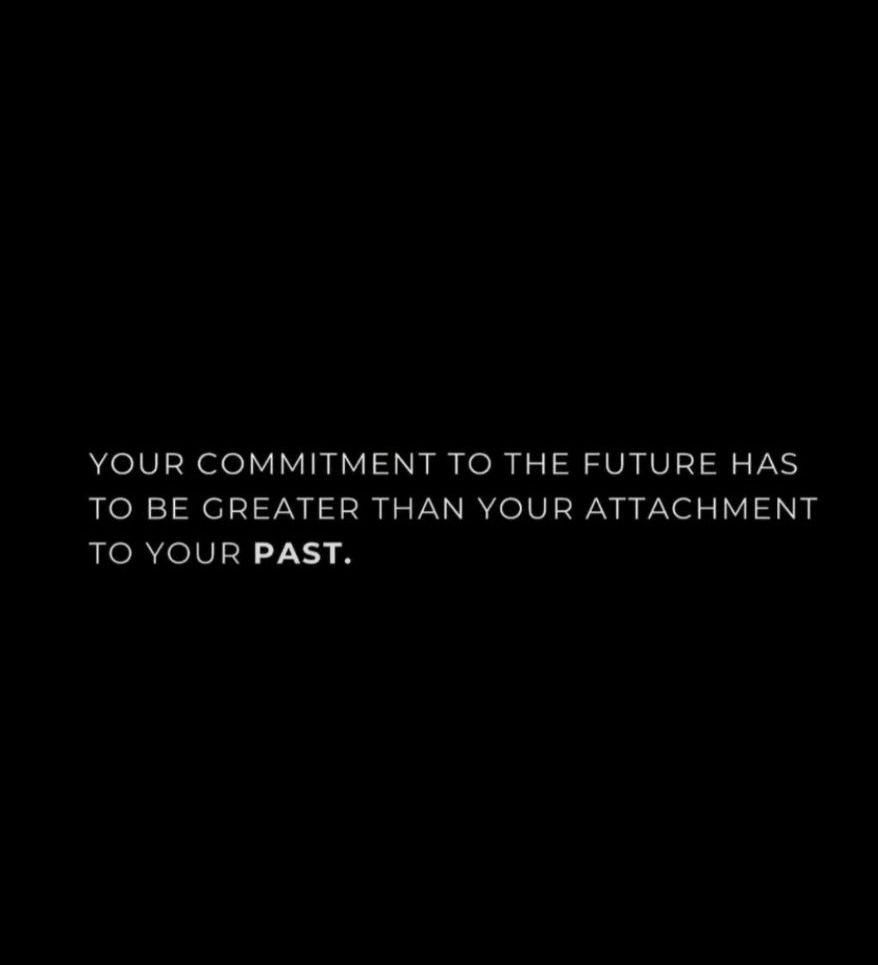
    I don’t spend my time living only in the past or worrying only about the future. I think about all three—past, present, and future—together ✨

    The past, for me, is not a place of regret. It is a place of learning. Every mistake, every pause, every decision that didn’t go as planned carries a quiet lesson. The past teaches me what not to do, what to hold on to, and what to finally let go of. Ignoring it would mean losing valuable wisdom. 💞

    The present is where correction happens. It is where awareness lives. What I learn from the past helps me make small but conscious changes today—how I react, how I choose, how I treat myself and others. The present is my chance to do things a little better, a little kinder, a little wiser. 🌙

    And then there is the future—not as a source of fear, but as a direction. I don’t obsess over it, but I prepare for it. I want my future to be shaped by understanding, not by repeating old patterns. The future becomes hopeful when the present is honest and the past is understood.🍀

    So yes, I think about the past, the present, and the future—but not separately.🕊️
    They are connected.
    Learning from yesterday, correcting today, and moving forward with clarity.🌿

    That, for me, is growth.💖

    Love ~ Shama ✨

  • What is the greatest gift someone could give you?

    The greatest gift someone could give me is the freedom to decide.

    Not perfection. Not protection. Not constant guidance.
    Just the space to make my own choices—even if I goof up.

    I believe there is something called a gut feeling, a sixth sense. I have it too. A quiet inner voice that understands things before logic steps in. But when every move is controlled, that voice slowly fades. You stop trusting yourself and start living by instructions.

    Sometimes, when life is too tightly managed, you feel the urge to make mistakes—not out of carelessness, but out of humanity. I want to miss a bus. I want to miss a flight. I want to get stuck in traffic and sit there with my thoughts, watching life move around me. These moments aren’t failures; they are experiences. They remind me that life isn’t meant to run only on schedules.

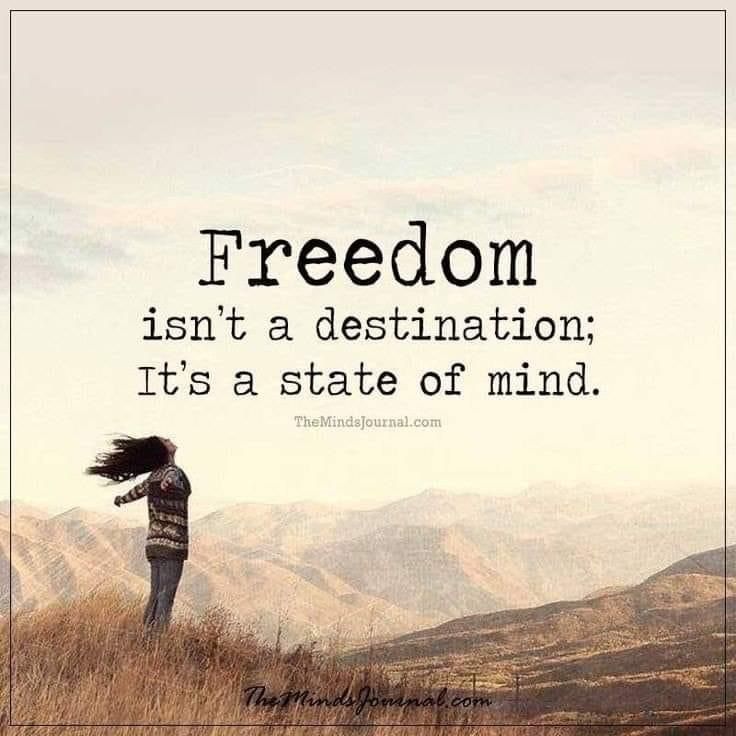
    Freedom doesn’t mean living alone. It doesn’t mean breaking away from people you love. It means feeling free even while living with your loved ones—being yourself without fear, without constant correction, without having to explain every choice. It means being trusted.

    I want the dignity of deciding for myself and the courage to own the outcome. Success feels meaningful only when it is chosen. Failure feels lighter when it is mine to carry. Independence doesn’t mean rebellion or irresponsibility. It means trust—trust that I am sensible enough to think, feel, assess, and learn.

    So yes, let me make mistakes. Let me listen to my gut. Let me arrive late sometimes. Let me take the long route. Let me take responsibility for my choices.

    That kind of freedom—given with faith, not fear—is the greatest gift anyone could offer me.🌿😊💞

  • Every day, without fail, I see this BBMP worker cleaning the road near my place.

    She arrives early, picks up a broom almost as tall as her, and begins sweeping—dust, leaves, yesterday’s leftovers—things most of us don’t even notice unless they inconvenience us.

    What astonishes me isn’t the work itself.
    It’s her.

    She comes dressed with care.
    A neatly draped saree.
    Pink shoes that quietly stand out against the grey road.
    Fresh flowers tucked into her hair.

    There’s dignity in the way she shows up.

    She knows exactly what her day will look like. She knows the weight of the broom she will lift again and again. And yet, she doesn’t arrive looking defeated or careless. She arrives prepared, almost celebratory, as if saying: This is my work, and I will do it well.

    And she looks… happy. Or at least, at peace. 😊

    That’s the part that lingers with me. 🌿

    Here we are—many of us with education, choices, comforts, options—and we complain endlessly. About our jobs, our bosses, our pay, our timing, our lives. We complain even before the day has begun.

    And here is this woman, doing one of the most physically demanding, least acknowledged jobs in the city, greeting her work with grace and self-respect.

    It makes me pause.

    Maybe dignity doesn’t come from the kind of work we do, but from how we do it.
    Maybe happiness isn’t always about ambition or upward movement, but about acceptance and pride.
    Maybe we underestimate the power of showing up neatly, sincerely, wholeheartedly—no matter the role.

    Watching her, I feel humbled.

    Not because her job is “lesser”—but because her attitude is greater.

    And I find myself asking quietly, honestly:


    What are we really complaining about?

    🙏

  • What are your biggest challenges?

    My biggest challenge is learning how to live with my emotions without letting them consume me.

    I am deeply emotional. I don’t get mildly sad or slightly moved—I feel everything at full volume. And when it becomes too much, I cry. Crying seems to be my only language. I don’t know how to convert my feelings into anger, detachment, or silence. They simply spill out as tears.

    One evening, it was raining heavily. A street dog near my house tried to take shelter at my opposite neighbour’s doorstep. They chased him away. He stood there for a moment—confused, wet, unwanted—before walking off into the rain to find another place to hide. That scene stayed with me long after the rain stopped. I cried that night, not just for the dog, but for everything he represented: helplessness, rejection, and the quiet cruelty that often goes unnoticed.

    I feel the same heaviness when I see small children at traffic signals—selling balloons, pens, flowers—standing between speeding vehicles instead of being in school or at play. I cannot look at them without feeling a knot in my chest. Their tired faces, their forced smiles, their tiny hands holding out hope—it breaks something inside me. The world feels unbearably cruel in those moments, and I feel helpless knowing how little I can do to change it.

    This is my struggle—to feel so much that even the pain of a stranger, an animal, or a fleeting moment becomes my own. I carry stories that aren’t mine. I grieve for things I cannot fix. My heart refuses to build walls, even when it probably should.

    But perhaps this is also my strength. In a world that is learning to look away, I still stop and feel. Even when it hurts. Especially when it hurts.

    My challenge is not to become less emotional—but to learn how to protect my heart while keeping it open.